


Start a New Product Project
TO YOUR NEW PROJECT
NEW PROJECT INTRODUCTION

If you have received this link, you have probably committed a tooling deposit or someone thought you might be interested in learning more about the development process. Fantastic and Thank your interest and support!
Your patience is greatly appreciated as we work diligently to bring your product to fruition. We understand that time is of the essence and you're eager to get your product to your customers, but let us assure you that we're leaving no stone unturned in our quest to deliver the best possible product to your intended users. With that said, the journey from conception to delivery is a multi-step process that involves a myriad of measures, each carefully designed to ensure the end product is nothing short of exceptional. To put it simply, here's a summary of the steps involved:
FINAL DESIGNS, 3DCAD
DESIGN FOR MANUFACTURING
(DFM)
TOOLING
PRE-PRODUCTION SAMPLES
MODIFICATIONS
TESTING AND QUALIFICATION

STRAIGHT TO MARKET
FIRST PRODUCTION RUN (PILOT RUN)
DISTRIBUTION

Skipping steps and rushing to launch a product may seem like a shortcut, but it often leads to more delays, increased costs, and the need for re-work or even scrap. It's important to trust your manufacturer's expertise in this matter. Of course, there may be times when we need to balance risks and opportunities, but it's essential to be aware of the potential risks involved.
Tip 1 - allow time for, and invest in more extensive sample builds (50-200 sets recommended)
TEAM MATES
The process of getting product made relies on 3 key technical areas working in synchronization – Design / Tooling / Manufacturing - as such, it is important to keep the relevant team members informed during the campaign by including the right people on e-mail carbon copy (cc) at all times.
Your assigned Project Leader will provide you with a contact list that explains the roles and functions of each person. He/she will be your main “goto” person for communication. Though most of the communication will be with your assigned Project Leader, at times there will be other team members involved who may communicate with you directly.
Generally, project teams are structured this way:

THE BIG KAHUNA
(YOU)

Sales, marketing distribution genius
THE project

project leader
Project
Administrator


COOL design
consultant

Of course, you could opt out of communications altogether (to focus on your marketing and business plans) if you have assigned your own technical team or consultant to follow the project.
(engineering minions)
THREEGON project leaders are supported by mechanical, sourcing, tooling, quality and manufacturing engineers. This is in addition to operations and shipping staff who look after your product ordering requirements. At times you may see some of them CC'ed on email communications or requesting further information.
A project administrator will also be assigned to keep track of any changes to the bill of materials cost, capital costs and quote project expenses as they arise and be of general administrative support to the project.

Let's get chatty!
While emails are fine, we find communication is often faster and clearer in a group chat. Questions and answers flow like natural conversation and we reach our objectives much faster. Your project leader will set up a chat group for your team. For anything formal, email info@threegon.com or call +852 2895 2254.
Your project leader will create a chat group solely for your product, and team members from all disciplines will be added to it. We suggest pinning the group so it always stays at the top of your chat list.
If you are worried about receiving too many messages, you can mute the group and turn on notifications only for messages that @mention you.
Tip 2 - if you don't have a product specification document, you can download a template by clicking here.
Our project teams typically consist of multiple team members who have different functions. It’s always a good idea for all of our team to know why your product exists, it’s uniqueness and critical to quality functions. What is it that you want your end user to experience with this product?
Help THREEGON, Help You!
We will gladly review your Product Specification Document (PSD) at this stage! Please send it through to your Project leader and it will be shared with the project team.
It is from this document we will derive our Quality Control Plan (QCP), and adjust our component sourcing plan if needed (it’s horses for courses).

Tip 3 - it is often useful to benchmark test your product's competitors in the market. Ask your project leader on how they may assist you.
It is often useful to benchmark test your product's competitors in the market. Ask your project leader on how they may assist you.
As an example, if your product is about protection - you may want to determine objectively how to measure the performance of of your product under actual use cases, and compare it with other similar products on the market.
Bench testing involves subjecting a product to controlled conditions in a laboratory setting to measure its performance and identify any defects or issues. While bench testing cannot replicate all the variables and conditions of real-world usage, it can provide valuable insights into a product's functionality and help identify areas for improvement. Moreover, bench testing is often faster, more cost-effective, and safer than real-world testing. Ultimately, a combination of real-world and bench testing can provide a comprehensive understanding of a product's performance and ensure that it meets the necessary standards of quality and reliability.

Real World Testing
Real-world testing is the most effective way to evaluate the performance of a product because it simulates actual usage conditions. However, it is not always possible or practical to conduct real-world testing, especially during the initial stages of product development. In such cases, bench testing, also known as laboratory testing, can be a good substitute.
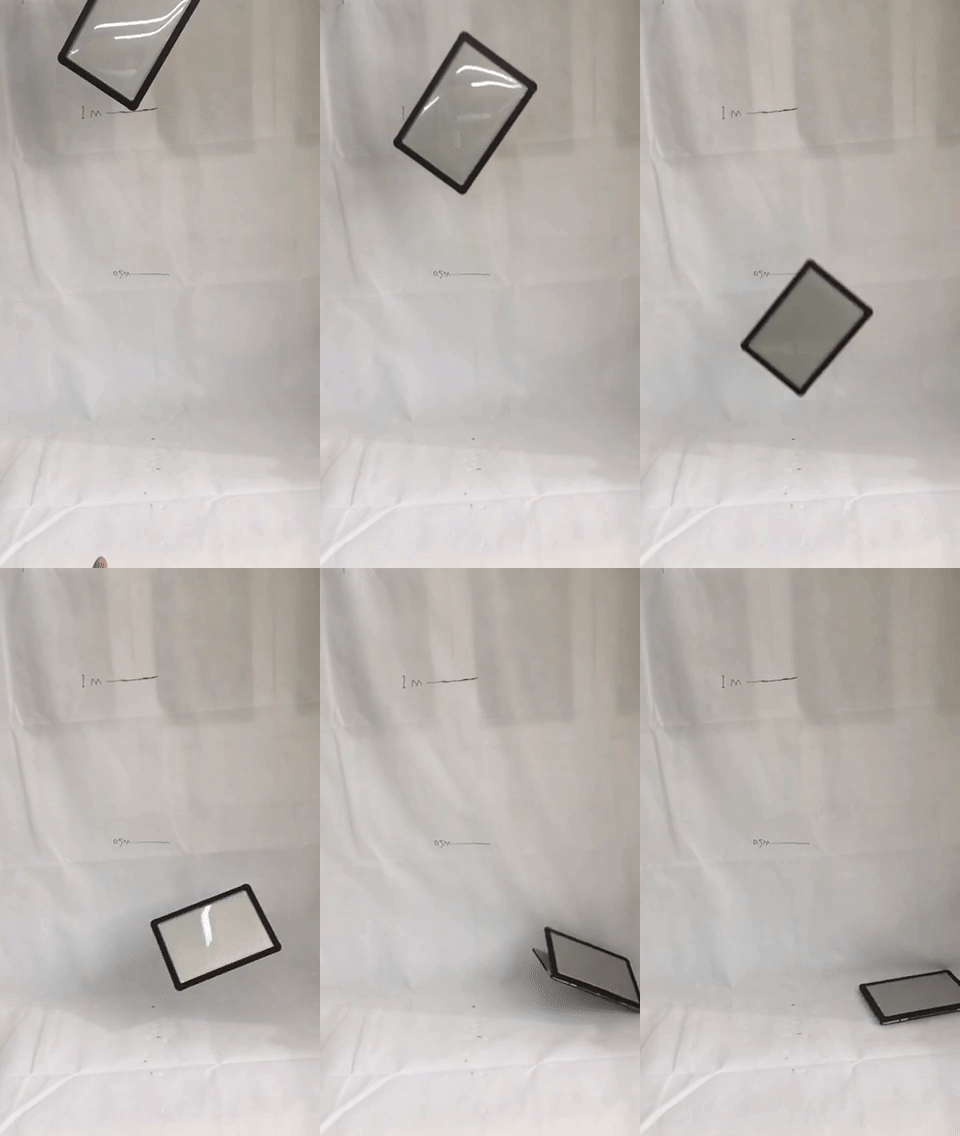
MIL-SPEC Drop Testing
Mil-spec drop testing is a standard testing procedure used to evaluate the durability and ruggedness of electronic devices and other equipment. The drops are designed to simulate the harsh conditions and impacts that the equipment might experience during transportation or use in the field. The device or equipment is then inspected for any damage or malfunctions.

Water Proofing
Testing products for water resistance is an important quality control measure to ensure that products function as intended. One common method of testing water resistance involves subjecting the product to a certain depth and pressure of water for a specified duration to simulate real-world conditions.

Bed of Nails Testing
Testing printed circuit board assemblies (PCBAs) is crucial to ensure that they function correctly and are free of defects. One common method of testing PCBAs is bed of nails testing, which uses a fixture with a grid of metal pins to make contact with specific test points on the board. This allows for automated testing of multiple points on the board simultaneously to check for issues such as shorts or opens.
Tip 4 - When conducting pricing studies for your product, it's important to factor in logistics costs and distributor margins to ensure that the final price is both profitable and competitive. Logistics costs include expenses such as shipping, storage, and handling. These costs can vary depending on the product type, shipping distance, and mode of transportation.
4 MAIN DOCUMENTS
for Project Tracking

The product cost is tracked weekly so you know at all times what the costs are.
BOM Cost

This document outlines the overall development schedule and covers the main phases of product development. Not all projects are the same, so certain steps are more or less relevant depending on the project.
Threegon Project Schedule

All known once time capital costs are listed here, the upfront investment needed to produce your product. (Paid 40% upfront, 30% at sampling stage, 30% at sign off)
Capital Equipment and Tooling Cost

This cost list will be used to quote and gain approval for project related expenses that may occur during the development of your product. Don’t worry, we will ask your approval before committing any expense.
• typically includes items such as, freight, sampling, modification costs, etc.
Project Expenses List
Costs
Explained

Your assigned Project Administrator will be your primary contact for Quotations, Cost Analysis and Invoicing.
Terminology
Minimum Order Quantity (MOQ)
There is an MOQ that we are willing to mould parts in, with anything below that becoming inefficient (cleaning, material purge, tooling setup, holding conditions tuning, part verification, time etc). That MOQ is usually defined as the quantity produced in ONE shift (8am to 5:30pm). This number is generally around 3000 shots, depending on part size.
Total Piece Cost (TPC) (based MOQ)
The total piece cost is defined as the cost of a part, produced at the MOQ.
Below MOQ Set-Up Costs (SUC)
Generally, no project will get quoted at less than MOQ. However we will provide the set-up costs for each part to cover situations where ordering below MOQ is required, such as testing / evaluation, pre-production runs, or special sampling runs.
For example, if you order an initial production run of 125 units the costs will be charged as
"TPC x 125 + SUC = the total cost for that part".
Economic Order Quantity (EOQ)
If at the time of quoting you are confident to order 8000 parts for example, then we will also also fill in the EOQ section of the quote. This ensures that you reap the cost benefit of higher order quantities.
If prior to production you need to revise the order to 4000 units, no worries - we would simply revise the quote where the MOQ would stay the same and the EOQ would be updated to 4000.

Quality Control Plan (QCP)
About Us

Based on the product specifications document (PSD), our independent QC team (quality cops) will design a Quality Control Plan (QCP) that will capture the key metrics of each part and process to making your product great. It is broken into 3 levels of control as outlined in the area below.

You are most welcome to become part of the creation of these documents. Just ask your assigned Quality Engineer to share their documentation with you.
PSD
QCP Quality control plan.
This is an overarching document that shows the overall method of control for your product. If there is something particular about your product that makes it unique, this is where we will design its quality control a little differently.
FQA Final Quality Assurance - the last line of defence.
Fully packaged product are randomly selected, unboxed and tested according to a criteria suitable for your product.
Should questionable conformance occur and it is not well defined whether it is acceptable, your assigned Quality Engineer will contact you directly for analysis and decision making.
FQA
iPQC In process quality control - the second line of defence.
As products pass through the value added chain, (printing, inserting, assembly) specific tests along the process are added to ensure the sub-assemblies are still conforming to standards, before moving on to the next process. When necessary, test jigs are built for these purposes.
iPQC
IQC Incoming quality control - the first line of defence.
Every component on the BOM will have an inspection sheet criteria. Every batch of parts will be tested to this criteria.
IQC
FIRST PRODUCTION ORDER
When your product has been signed off and ready for its big day, our Project Administrator will contact you about releasing a purchase order and keep you up to date with your first shipment.
Keep in mind, as it is the first time mass production, hiccups may occur along the way and it may take some time for us to address them. It is our prerogative to not release a product that does not conform with the product specification document. The likely hood of issues arising during production gets exponentially lower after larger more extensive sample runs and ongoing production.
Our shipping department will update you on future purchase orders that are sent to orders@threegon.com


LOGISTICS / PRODUCT SHIPMENT


Know about the options you have available.
After a container loading plan has been worked out by our shipping department or your own forwarder, our shipping department can quote to you the freight cost for your order direct to your warehouse.
They will need:
• An physical address or nearest port.
• Contact person, telephone number.
• Sea Freight (usually cheaper overall for THREEGON to ship to your nearest port).
• Air Freight (may vary based on time of year and destination)
Alternatively, if requested our shipping department can provide you with:
• the shipping volume, weight, packaging slip
so that you can obtain a quote from your own designated forwarder.

Just one last thing...
If you can find the time, please feel free to arrange a visit to our factory to meet the team in person. We always welcome a visit. We cannot stress how worthwhile it will be for you to come and see our operations and to put faces next to names. Swing by via Hong Kong or fly direct to Biao An Airport in Shen Zhen, and we can arrange to bring you over to our factory in China.
-
You may need to apply a Chinese Entry Visa and we’d be happy to supply you with an invitation letter. In fact, you can download a template here and submit to your local Chinese embassy.
-
You may need to bring a packet of Tim Tams or Allens Party Lollies Retro Mix (just kidding!)
-
Please contact your sales support engineer to make the arrangements.
-
If you have any further questions about this web page, please don’t hesitate to contact Scott :
4 CONTRACTS Making clear our obligations to you.
Non-Disclosure Agreement (standard)
We understand the need to keep your new product idea under wraps. Protecting our client's most sensitive information is very important to us. If you don't already have one, a non-disclosure from can be downloaded by clicking here.
Tooling Terms (standard)
The tools we design and build for you, are for your products exclusively. At no time, will we use them for any other purpose other than to fulfil your product requirements. We will maintain and securely store your tools for as long as there are orders for your product. To help with understanding our obligations, you can download a tooling contract by clicking here.
Supply Agreement (standard)
As promised, we will build product according to specifications. What gets qualified at the engineering stage, is what gets produced, via a myriad of control measures outlined in the QCP. To help with understanding our obligations, you can download a supply agreement by clicking here.
Intellectual Property
While we expect that you have your bases covered, we remind you not to neglect protecting your IP from within the peoples republic of China. If you need to engage a local patent attorney, we can refer you to our external legal counsel who assist some of our existing clients.